 Yesterday was one of those funny clothing days, where I walked around knowing that I looked–and felt–good. Sure, I could be a size 6 (if I starved myself for a few months), but that’s not the kind of “good” I had in mind.
There I was, walking around in my size 14 jeans (a nice change from the size 16 I was sporting a year ago), my brand-new 38D Natori “Feathers” bra from Nordstrom (because, shockingly, the 42B t-shirt bra they’d been fitting me for at Lane Bryant was WRONG WRONG WRONGITTY WRONG), and my awesome hot boots from the Clarks Outlet. I felt comfortable in my own skin.
I haven’t given up on losing more weight. On the contrary, I’m still working on it wholeheartedly–just in a manner that actually works for me. I have my “go-to” items that help to keep me on track, and they’ve become reliable staples of my diet. Let me be specific about “diet” and what that means for me:
I don’t adhere to a “diet” in the sense of a system, a theme, or some other titled designation. I’m talking “diet” in terms of HOW I EAT. No title needed.
U.S. News & World Report recently released a ranking of 35 diets (ranging from for-profit plans to more general lifestyles, like vegetarianism), and the key foci that were used for ratings were things like ease of adherence, nutritional completeness, ability to produce weight loss (short-term and long-term), safety, and ability to prevent chronic conditions, like heart disease and diabetes. When I think about how I try to eat, I’m focusing most heavily on adherence, safety, ability to produce long-term weight loss, and preventing chronic conditions (since I have a family member with Type 2 Diabetes and heart disease).
If I were to pick a “diet”, I’d be looking hard at the list from U.S. News because their approach was logical and their methodology appears sound. To me, that’s far better than the nonsense I typically see peddled on Facebook, like people making “Paleo” cookies, the endless array of “cleanses”, shakes, and other gimmicky items that are either chemical-laden or just not right for someone looking for a balanced approach to their life. I’m a hypoglycemic (mild enough that I manage it in how and when I eat, versus with medication), and the concept of deprivation or extreme limitations just doesn’t even work. It doesn’t even make sense!
So, how have I been able to lose weight? Here are three items that are reliable, faithful helpers in my quest to continue to fit into my skin:

1. Lipton Iced Tea: drinking a glass of tea with any meal keeps me hydrated and fills me up, without being the “boring” drink that water can sometimes be without some kind of additive. During the warmer months, I buy the gigantic box of Decaf Lipton Iced Tea bags


2. York Minis

3. Starbucks Decaf Coffee
Looking at this list, it’s pretty easy to see that none of these items fall into the category of “highly unhealthy” foods, and they’re all easily sustainable. In general, they’re also fairly affordable (and substitutes exist–especially for my caffeinated friends). Even better, I’m not sacrificing flavor; my taste buds are still quite satisfied. I have milk and sugar in my coffee, and I’m not counting how long I pour. If I have 15 York Minis instead of 10, I’m not going out for a power-walk to make up for the extra handful of calories. And if I chug my tea too fast, another pitcher is no more than a few minutes to an hour away.
Of course, this is what works for me. Different people have different solutions, but mine is based on my desire to find something that I can do for the rest of my life without feeling like I’m owned by any one company, like I have to justify myself to my doctor, or like I’m sacrificing anything. That’s big. And when you’re trying to get smaller, big can be a really fantastic thing.
Note: product links are provided for illustrative purposes. If you decide you want to purchase from Nordstrom or Amazon – go for it! Otherwise, feel free to buy these items wherever you’d like. Also, none of the companies noted above paid for me to mention their products.

 I liked. The only thing that held me back from buying it there was that Amazon had a better price for it. When I hesitated on the purchase, the sales associate asked me why–so I told her about the other price. I showed her the listing on my phone, and she was able to get me a bigger discount on the jacket to get the price down by quite a bit. It didn’t match Amazon’s price, but I was willing to pay the newly negotiated price, chalking up the difference to “I have it now”. [In my mind, this is the “Time Value of Money” concept represented as “Time Value of HAVING GEAR NOW”–often important when timing purchases for specific events.] Some sporting goods chains also price-match or honor each others’ coupons, so check store flyers and ask at the register!
 that I bought); tighter, more form-fitting shirts will tend to keep you warmer, but not everyone likes that style. Feel can also be somewhat important; my Craft shirt is incredibly soft–and that makes me far less likely to freak out about its body-hugging style.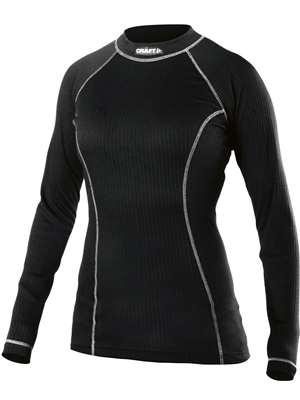
 is very comfortable, although in that 5ºF walk I referenced in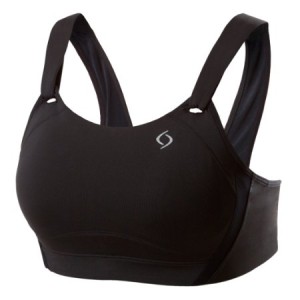
 , but the size selection at Marathon didn’t work for my awkward frame. That’s not any reflection of Moving Comfort’s product or Marathon’s selection; finding comfortable bras (whether for exercise or more formal purposes) is always very difficult for me. Still, it was easy to see that these were jogbras at a quality level I hadn’t seen; the good old shelf-bra was visible, but many of these higher-end bras have velcro-adjustable straps and adjustable fasteners for the bust line; some even have underwire (if you’re into that sort of thing). No matter how you go, just make sure it’s wicking, to reduce chafing and keep your temperature better managed.
 I also considered, giving me more room for layering.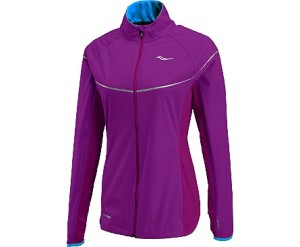
 , enable you to fiddle with your smartphone without having to expose more skin in cold weather, and some hats, such as the
  (above), cover your head with a warm, comfy fleecy beanie while still allowing an outlet for a ponytail. My head was toasty warm on my chilly walk, thanks to that TrailHeads hat!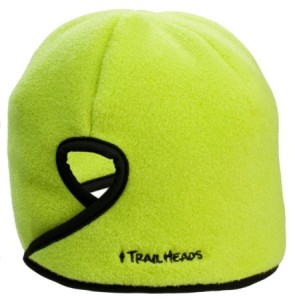
 that DH bought me for Christmas). Given the shorter daylight hours and potentially snow or ice-covered walkways and sidewalks, winter walking often requires sharing the road with cars. It’s your responsibility to be visible, and even a small strobe can make a big difference.